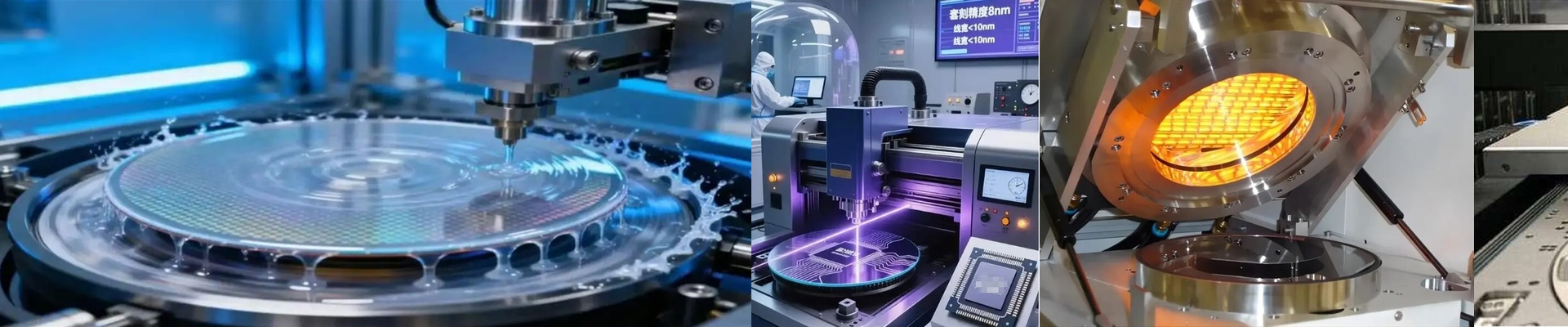
On a 300mm line, a 0.3°C drift across the wafer will move critical dimensions on you. One unplanned stop can wipe out the month’s thermal budget in a heartbeat. Conformal coating for wafer IR isn’t a nice-to-have. It’s the thermal anchor that keeps lithography and photoresist processing in spec, shift after shift. What we built it around We tune the coating for infrared response and temperature uniformity, holding ±0.1°C across the wafer during soft bake and hard bake. The film is cleanroom-compatible from Class 1 to Class 100, and particle generation stays low enough that you don’t see yield take a hit. It survives repeated thermal cycling without cracking or outgassing, so repeatability holds up over thousands of lots. The platform is built for 7×24 operation, with zero unplanned failures in sustained high-volume use, and service life that runs well beyond typical thermal components. Here’s the payoff in photoresist processing: consistent temperature means consistent line width, fewer reworks, and stable defect performance. You claw back process margin, which shortens qualification cycles and trims scrap. Energy use drops because the system hits setpoint fast and holds it without hunting. Fewer replacements mean less maintenance inside the cleanroom, fewer alignment checks, and more uptime on the track. A couple of practical notes. Installation needs to match the IR source geometry and emissivity profile—mismatched fixtures will skew uniformity. The coating works in inert atmospheres and standard clean dry air, but exposure to certain solvents in the downstream clean step can shorten life. Plan the interface and the cleaning method up front, and you’ll get the thermal repeatability the coating was built to deliver.