


Ditching the Oven: A Smarter Way to Build Biosensors
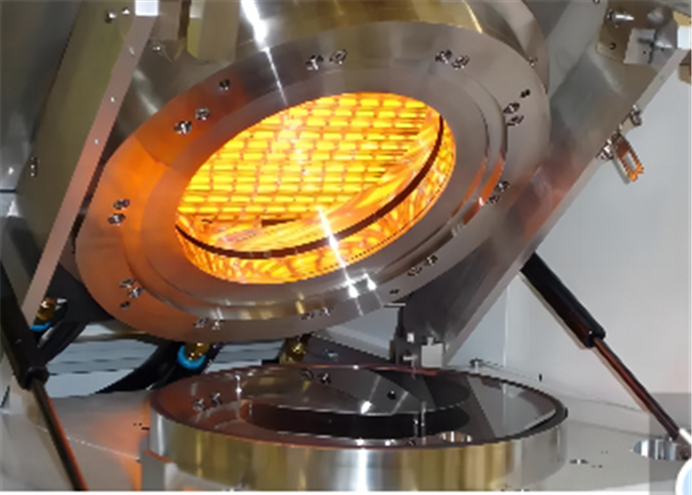
Making biosensors usually involves a lot of curing and drying. For years, we’ve just shoved everything into big convection ovens. But here’s the problem: those ovens are energy hogs. They spend half their time heating up the air and the walls of the chamber before they even touch the product. It’s a waste. That’s why we’ve moved to infrared (IR) lamps. Instead of heating the whole room, we just hit the target. Getting the heat exactly where it belongs IR lamps work differently. They use radiation to send energy straight into the substrate. When you’re dealing with layers that are only a few microns thick, you can’t afford to wait around for a giant box of air to warm up. With short-wave IR, you get a nearly instant ramp-up. You’re focusing all that energy right on the wafer or the sensor array. No waiting. No wasted kWh. It just works. The balancing act Of course, it’s not as simple as just turning on a bright light. You need a lot of intensity to make sure the curing is even across the whole surface, but you can’t go overboard. If you fry the biological reagents, you’ve just ruined your batch. To keep things under control, we use PID controllers and fast-response thermocouples. It’s all about the balance. High-wattage lamps are great for speed and high volume, but they can be aggressive. If you don’t manage the ramp-down, you risk warping the material or creating thermal stress. You’ll need a cooling manifold that can actually handle the leftover heat, or your specs will start drifting. Cleaning up the factory floor The best part? This actually changes how your lab looks. You can rip out a massive, clunky drying oven and replace it with a compact IR tunnel. It saves a ton of space. Plus, because you aren’t pumping massive amounts of waste heat into the room, your HVAC system doesn’t have to work nearly as hard to keep the place cool. It’s a simple, hardware-level fix. Less waste, smaller gear, and faster cycles. That’s how you actually move toward a carbon-neutral cleanroom.