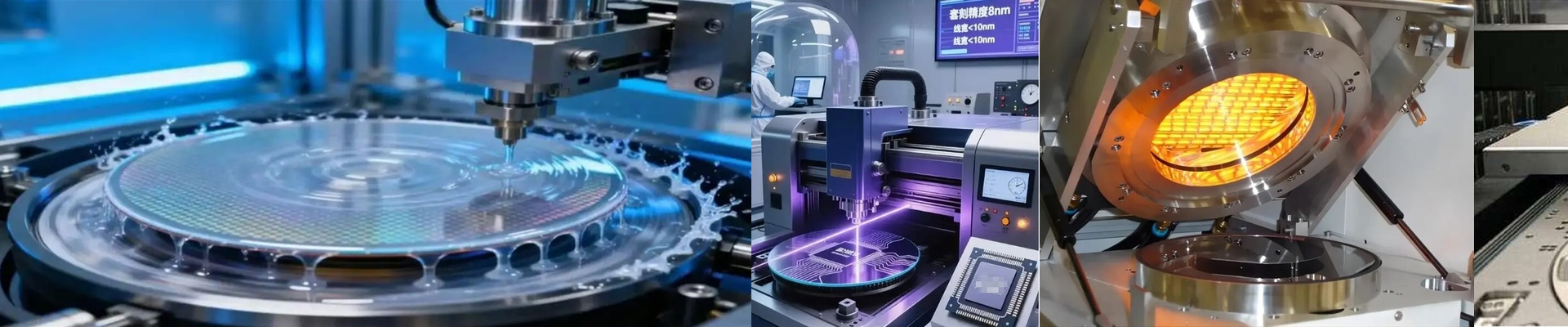

Out on the fab floor, you know how quickly a good run can turn into a scrap pile. A 0.3°C drift in the LPCVD furnace profile is enough to push critical thickness targets off-spec. When the heating element starts to underperform, thermal uniformity falls apart, doping and deposition stoichiometry follow, and the lithography stack takes the hit. Photoresist soft bake and hard bake windows narrow, CD control tightens, and etch selectivity starts to drift.
What matters under the hood
We built the LPCVD furnace heating element around one thing: repeatable temperature control the length of the tube, with wafer-level uniformity within ±0.1°C. The halogen/quartz design pairs short-wave and medium-wave output to hit fast ramp rates without blowing the thermal budget. It’s rated for 24/7 duty, generates zero particles, and sits comfortably in cleanrooms from Class 1 to Class 100. Power density is tuned to the chamber geometry, and the interface matches the target furnace platform—connector, footprint, the whole thing—so the swap is repeatable and service time stays short.
Why this matters in LPCVD
In LPCVD, the heating element sets the process envelope. Tight uniformity protects across-wafer film thickness, keeps the resist profile clean after soft bake and hard bake, and keeps etch endpoint consistent. The upshot is stable run-to-run repeatability, fewer qualification lots, and maintenance intervals you can plan around. Power draw is matched to the thermal load, so utility cost per wafer drops without slowing throughput.
The practical details you’ll want to get right
The element has to be matched to the furnace controller’s feedback bandwidth. If the PID loop is tuned too aggressively, you’ll see overshoot. During install, line up the thermal mass properly—mis-seating will drift setpoint accuracy. And yes, there’s a finite lifetime under high-temperature cycling. Schedule preventive replacement with your PM calendar so you don’t get blindsided by unplanned downtime.